Commercial Drywall Contractor in Denver

Steel Bridge Construction provides commercial drywall installation, drywall finishing, and interior construction support across the Denver metro area. Our clients include businesses, landlords, property managers, commercial tenants, and project teams. We handle drywall scopes tied to remodels, tenant improvements, office buildouts, retail spaces, and larger construction projects.

Commercial drywall in Denver runs best when the scope is clear before the crew arrives. We review your scope, plans, photos, timeline, and next steps with you. For a faster estimate, send the project address, photos or plans, scope of work, desired timeline, and any landlord or property management requirements.

Need Commercial Drywall Work Done Right?

Steel Bridge Construction handles drywall installation, taping, and finishing for offices, retail spaces, and tenant improvements across the Denver metro.

Get a Free Estimate

What does a commercial drywall contractor in Denver do?

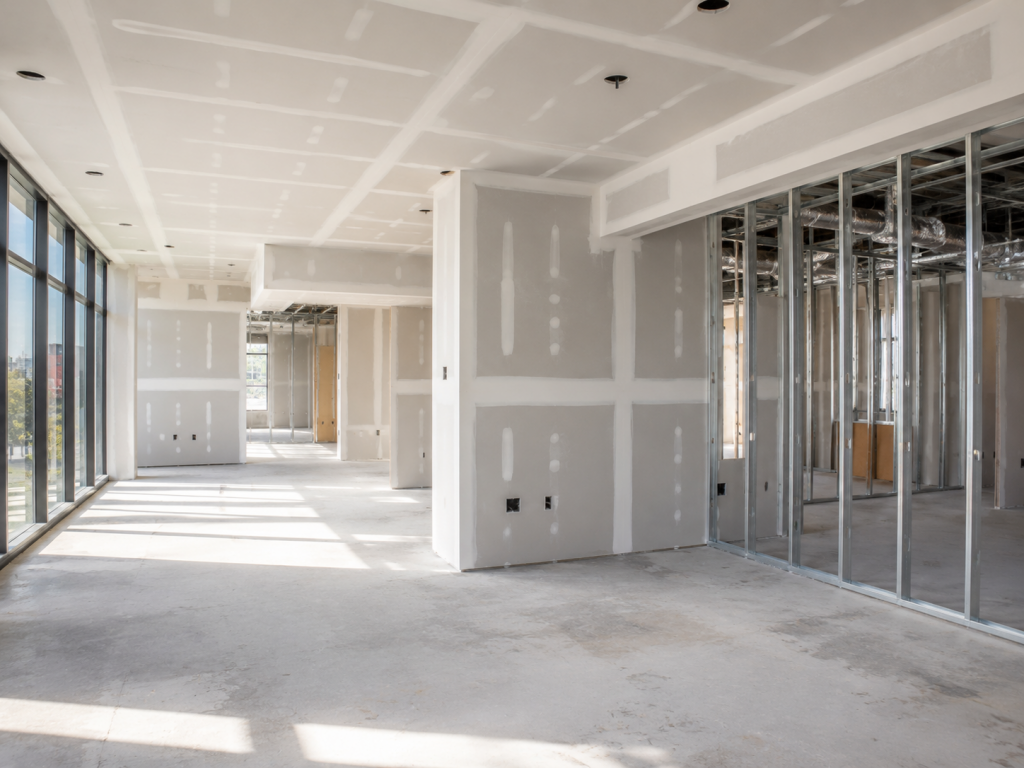
A commercial drywall contractor installs, finishes, and repairs gypsum board walls and ceilings in business buildings. The work covers more than hanging sheets. Commercial drywall needs planning, layout coordination, framing awareness, clean installation, and attention to finish quality.

Commercial drywall in Denver also has to fit with the other trades. Electrical, plumbing, mechanical, fire protection, and finish work all touch the same walls. Poor coordination between these trades leads to patching and rework later.

  • Commercial drywall installation: Offices, tenant improvements, retail spaces, commercial interiors, business renovations, and interior buildout projects.
  • Drywall finishing: Taping, mudding, sanding, texture coordination, patching, and finish preparation for paint and final construction details.
  • Tenant improvement drywall: Leased commercial spaces, office buildouts, retail units, interior partitions, restroom updates, back-of-house spaces, and business interiors.
  • Drywall, framing, and repairs: Commercial drywall repairs, framing coordination, wall layout support, damaged wall repair, patching, and drywall tied to larger remodeling projects.

Our commercial drywall installation page describes the installation side of this work in more detail.

What is a commercial contractor, and why does it matter for drywall?

A commercial contractor builds, remodels, or renovates spaces for businesses rather than homes. Owners, landlords, and tenants hire one to organize the trades, the schedule, and the scope of a commercial interior.

Steel Bridge Construction is a licensed general contractor in Colorado, based in Denver, CO. We handle drywall for offices, retail spaces, and tenant improvements. We also work directly from plans, drawings, or landlord requirements to keep projects on schedule.

A general contractor changes how the drywall scope runs. Framing coordination, drywall installation, and finishing sit with one team, so you do not manage multiple subcontractors. The table shows where that matters.

Scope item Handled under one contractor Risk when split across separate parties
Framing coordination Wall layout and framing stay matched to the drywall plan Framing and board layout drift apart
Drywall installation Board goes up after framing and rough-in are ready Crews wait on each other or close walls too early
Finishing Taping, mudding, and sanding follow installation directly Finish quality gets blamed between parties
Trade coordination One point of contact manages electrical, plumbing, mechanical, and fire protection timing Owners relay questions between several firms

Is commercial drywall 5/8 inch thick?

Commercial drywall is often 5/8 inch thick, but the plans decide the thickness for each wall. Five-eighths inch Type X board is common where an assembly needs a fire rating. Half-inch board still appears in non-rated partitions and some repairs.

Board type Typical commercial use What decides the choice
1/2 inch gypsum board Non-rated interior partitions and some patch work Wall type shown on the drawings
5/8 inch Type X gypsum board Fire-rated walls and ceilings Fire-rating requirements on the plans
Moisture-resistant board Restrooms and other damp areas How the room will be used

Existing wall thickness drives the rule for repairs. A patch that does not match the surrounding board leaves a visible ridge or breaks a rated assembly. We confirm thickness and rating before anyone orders material.

Plans and landlord requirements settle the question on tenant improvement drywall. When no drawings exist, we check the existing walls on site and flag any rated assembly before work starts.

Why is commercial drywall hung vertically?

Commercial crews hang drywall vertically when wall height, framing, or assembly details make that layout cleaner. Vertical hanging is a choice, not a universal rule. Horizontal hanging remains common on many standard walls.

  • Wall height: A vertical sheet can run from floor toward ceiling on taller walls and remove a long horizontal joint.
  • Joint location: Vertical board edges land on studs, which are framed at set spacing.
  • Finish work: Fewer horizontal joints mean less taping and sanding on the finished wall.
  • Rated assemblies: The tested assembly detail on the plans can specify the board direction.

Framing type affects this decision. Metal studs set the spacing that board edges must hit, so layout and framing need to agree before hanging begins. Our steel stud framing work supports that coordination.

The drawings and the framing conditions settle the hanging direction on each project. We review the wall layout during project review so the crew does not guess on site.

Need Commercial Drywall Work Done Right?

Steel Bridge Construction handles drywall installation, taping, and finishing for offices, retail spaces, and tenant improvements across the Denver metro.

Get a Free Estimate

How does our commercial drywall process work?

Our commercial drywall process runs in four stages, from project review to the final walkthrough. Each stage has a clear purpose and a clear input from you.

Stage What we do What helps from you
Project Review We review the project address, photos, plans, wall layout, drywall scope, timeline, and business or property requirements. Address, photos, and plans if available
Estimate & Planning We identify the drywall work, framing coordination, materials, finish level, schedule, and trade coordination needed. Desired timeline and landlord or property management requirements
Construction Coordination We coordinate the drywall scope, communicate clearly, and keep the project organized from installation through finishing. Site access and quick answers on changes
Completion & Walkthrough We review the finished work and confirm the drywall scope is complete with attention to detail. Walkthrough feedback

Sequencing protects the schedule on every drywall job. Framing and in-wall work for electrical, plumbing, mechanical, and fire protection must be complete, and any required inspections passed, before board closes the walls. Closing a wall early forces cut-outs and patching.

What affects the scope of a commercial drywall project?

The scope of a commercial drywall project depends on a handful of drivers that we confirm during the estimate. Cost follows these drivers, so we price after reviewing the details rather than quoting from a general description.

  • Wall layout: The number of partitions, wall heights, and ceiling conditions set the installation scope.
  • Finish level: The finish required for paint or final details sets the taping, mudding, and sanding effort.
  • Framing condition: New framing, existing framing, or damaged framing changes the coordination needed.
  • Existing damage: Damaged wall repair and patching add steps before finishing.
  • Trade coordination: Electrical, plumbing, mechanical, and fire protection timing affects when boards can close walls.
  • Timeline and requirements: Landlord or property management rules can limit hours, access, and sequencing.

Common drywall mistakes usually start with missing information. Owners sometimes request an estimate without photos, so the crew prices the wrong wall type. Others order board before confirming the fire rating. Others skip the finish level, which leads to disputes at walkthrough.

A simple decision rule prevents most of these problems. Confirm wall layout, board type, and finish level in writing before installation starts.

How do you choose a commercial drywall contractor in Denver?

A commercial drywall contractor in Denver should be licensed, show commercial project experience, offer references, and communicate clearly about scope and timeline. Ask for each item before you sign anything.

  • License: Steel Bridge Construction is a licensed general contractor in Colorado, based in Denver, CO.
  • Scope clarity: The estimate should name framing coordination, installation, finishing, and finish level.
  • Plan handling: The contractor should work from plans, drawings, wall layouts, sketches, or landlord requirements.
  • Communication: One point of contact should answer questions about schedule and trade coordination.

Steel Bridge Construction serves Denver and surrounding metro areas, including Aurora, Lakewood, Englewood, Arvada, Littleton, Westminster, Wheat Ridge, Centennial, Highlands Ranch, Thornton, Golden, and nearby Colorado communities.

Drywall often belongs to a larger interior project. Our tenant improvement contractor services and office buildout work cover the wider scope around the walls.

Frequently Asked Questions

What types of commercial drywall projects do you handle?

Steel Bridge Construction handles commercial drywall installation, drywall finishing, drywall repairs, tenant improvement drywall, office remodels, retail renovations, interior buildouts, and drywall scopes connected to commercial remodeling projects. We also coordinate framing when the drywall scope depends on new or changed walls.

Do you handle drywall for tenant improvements?

Steel Bridge Construction handles drywall installation and finishing for tenant improvements. That includes office buildouts, retail units, commercial interiors, and leased business spaces throughout the Denver metro area. We also review landlord or property management requirements before work starts so the drywall scope matches the lease.

Can you work from plans or drawings?

Steel Bridge Construction can work from plans, drawings, wall layouts, sketches, or other design documents. Send them with your project details so we can understand the drywall scope, board type, and finish level. If no drawings exist, photos and measurements still let us start the review.

Do drywall contractors clean up after the job?

Drywall contractors should clean up debris, scrap board, and dust as part of a professional job. Sanding creates fine dust, so protecting the space and cleaning surfaces matters. Confirm cleanup expectations in the scope before work begins, especially in occupied buildings with landlord or property management rules.

Do you serve areas outside Denver?

Steel Bridge Construction serves Denver and surrounding metro areas. Those include Aurora, Lakewood, Englewood, Arvada, Littleton, Westminster, Wheat Ridge, Centennial, Highlands Ranch, Thornton, Golden, and nearby Colorado communities. Send your project address and we will confirm that the location fits our service area.

What should I send before requesting a drywall estimate?

A useful drywall estimate request includes the project address, photos, plans if available, scope of work, desired timeline, wall layout details, and any landlord or property management requirements. These details let us identify framing, board type, finish level, and trade coordination before we price the work.