Drywall Contractor in Denver for Homeowners

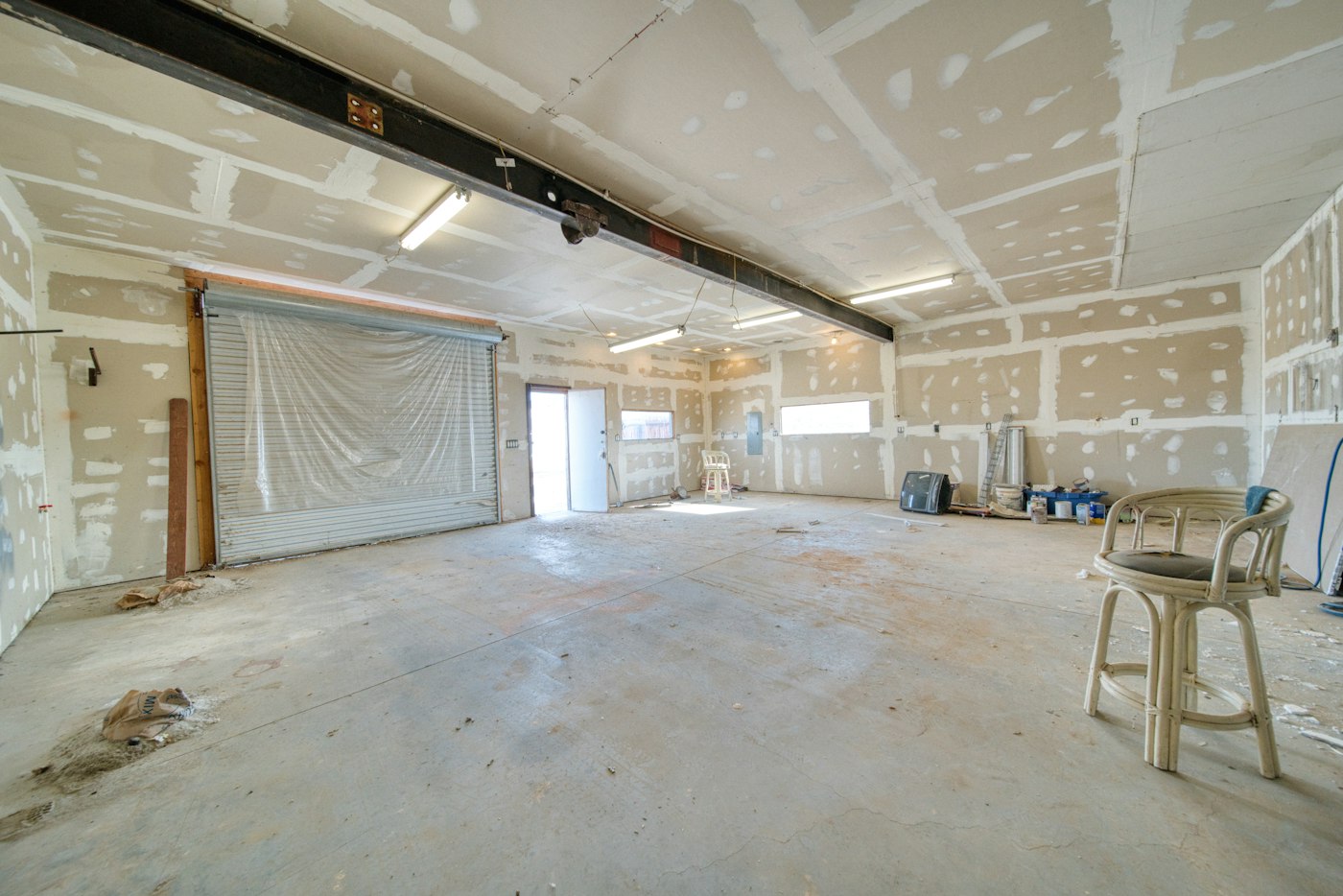
Room with new drywall hung and taped, joint compound visible on the seams and screw heads

Steel Bridge Construction works as a drywall contractor for homeowners across the Denver metro. We hang new drywall, tape and finish seams, apply texture and repair damaged walls and ceilings. We also handle popcorn ceiling removal once testing confirms what an older ceiling contains. Each job follows a set sequence, so you know what happens in every room and in what order.

Homeowners searching for drywall contractors near me usually want three answers: what the work includes, how the job runs and which rules apply. The sections below cover drywall installation, drywall finishing, drywall texture and drywall repair first. Lead paint and asbestos rules come next, because they apply across Colorado to many older homes. The final sections help you match a project to the right contractor and compare bids fairly. Business owners can find details on our commercial drywall contractor services instead.

Need a Drywall Contractor in Denver?

Steel Bridge Construction hangs, finishes, textures and repairs drywall for homeowners across the Denver metro.

Get a Free Estimate

What does a drywall contractor do for Denver homeowners?

A drywall contractor installs, finishes, textures and repairs the gypsum board that forms your interior walls and ceilings. Searchers also use the term sheetrock contractors for the same trade. Steel Bridge Construction covers each stage of that work for homes in the Denver metro. The list below shows what each service includes, so you can see which one fits your project.

  • Drywall installation: Hanging new board on walls and ceilings, fastened to framing, with seams laid out to reduce joints
  • Drywall finishing: Taping joints, applying joint compound in several coats, sanding and priming for paint
  • Drywall texture: Knockdown, orange peel, smooth finishes and matching an existing wall or ceiling texture
  • Drywall repair: Cracks, holes, popped fasteners, patches and water-damaged sections
  • Ceiling work: Ceiling repair, re-texturing and popcorn ceiling removal after testing in older homes
  • Board selection: Moisture-resistant board in bathrooms and basements; fire-rated Type X board where the plans or code call for it

Drywall is also one stage of larger projects such as basement finishing, bathroom remodels, garage conversions and home additions. In those projects, drywall follows framing, electrical, plumbing and insulation. Paint and trim follow the drywall. Getting that order right protects the finished walls from cutting and patching later.

How does a drywall project run from walkthrough to paint-ready walls?

A drywall project runs through a fixed order of stages, and each stage depends on the one before it. Skipping or rushing a stage shows up later as visible seams, cracks or uneven texture. The table below shows each stage, what happens and what you should check.

Stage What happens What the owner should check
Site walkthrough We review the rooms, the damage or plans, ceiling heights and access That the scope lists every wall, ceiling and repair
Testing in older homes Lead and asbestos questions are answered before any cutting, sanding or scraping That results exist before demolition starts
Protection and prep Floors, furniture and doorways are covered and dust control is set up That living areas are sealed off from the work
Hanging Board is cut, fitted and fastened to framing Correct board type in wet areas and rated assemblies
Taping and mudding Joints are taped and covered with joint compound in several coats Flat seams and covered fastener heads
Sanding and texture Compound is sanded smooth, then texture is applied or matched Even texture that blends with existing surfaces
Priming and handoff Surfaces are primed and ready for paint A final walkthrough under the room’s normal light

Homeowners often ask whether drywall contractors clean up after the job. A well-run drywall job includes daily cleanup and a final removal of dust, scraps and offcuts. Confirm in writing that cleanup and debris removal are part of the scope. Sanding dust travels far beyond the work area without proper protection.

Which drywall finish level and texture suit each room?

Drywall finish level should match the paint sheen and the light in each room. The industry uses Levels 0 through 5, and Level 5 is the smoothest. Higher levels add more compound and more skim work across the surface. Our guide to drywall finish levels explains each level in detail.

  • Lower finish levels: Suit areas that will be covered, such as behind tile or in unfinished spaces
  • Level 4: Suits most living spaces with flat paint or a knockdown or orange peel texture
  • Level 5: Suits smooth walls, glossy paint and rooms with strong side light from windows or fixtures
  • Knockdown texture: Flattened spatter pattern that hides small imperfections
  • Orange peel texture: Fine spray pattern with a light, dimpled surface
  • Smooth finish: No texture; needs a higher finish level because every flaw shows

Texture matching is the hardest part of most patches. A patch can be flat and solid yet still stand out when the pattern or sheen differs. We match the existing pattern on the surrounding wall, then prime the patch so paint absorbs evenly. Raking light from a window gives the most honest test of a finished patch.

Need a Drywall Contractor in Denver?

Steel Bridge Construction hangs, finishes, textures and repairs drywall for homeowners across the Denver metro.

Get a Free Estimate

Should you repair a drywall section or replace it?

Drywall repair makes sense when the board is dry, solid and damaged only at the surface. Replacement makes sense when the board is wet, soft, moldy or crumbling, or when damage spreads across a large area. Our drywall repair guide covers common repairs in more depth. The decision rule below reflects standard trade practice.

  • Hairline cracks at seams: Repair: re-tape and refinish the joint
  • Popped fasteners: Repair: reset or replace the fastener, then refinish
  • Small holes and dents: Repair: patch, skim and match the texture
  • Large holes or broken board: Replace the section back to framing, then tape and finish
  • Stained board that is now dry and firm: Fix the source first, then decide after a moisture check
  • Wet, soft or moldy board: Replace: cut out and remove it, never paint over it

Water damage leads to the most common drywall repair mistake: painting over a stain without fixing the cause. Stain-blocking paint hides the mark, but the leak keeps soaking the board behind it. A plumber or roofer should fix the moisture source first, whether it is a pipe, a roof or a window. Only then should we cut out wet or moldy board and replace it.

Do lead paint and asbestos rules affect drywall work in older Colorado homes?

Lead paint and asbestos rules affect drywall work in many older homes across Colorado, not only in Denver. The U.S. EPA sets the lead rules, and the Colorado Department of Public Health and Environment (CDPHE) sets the state asbestos rules. Confirm the details for your home directly with EPA and CDPHE.

Lead-based paint remains common in homes built before 1978, the year the federal government banned its sale for home use. EPA states that approximately three-quarters of U.S. homes built before 1978 still contain some lead-based paint. Sanding and cutting painted surfaces can create dangerous lead dust. EPA’s Renovation, Repair and Painting Rule requires anyone paid for that work to be certified and trained. The rule covers all firms, even sole proprietorships, so ask any contractor for its certification.

Asbestos was more widely used before the 1990s, including in popcorn ceilings and textured wall and ceiling finishes. CDPHE states that only a test by an accredited laboratory can confirm asbestos. Buildings of any age may contain asbestos-containing materials, so home age alone does not settle the question.

  • Single-family trigger levels (CDPHE): 50 linear feet on pipes, 32 square feet on other surfaces, or the volume equivalent of a 55-gallon drum
  • Inspection above trigger levels: A Colorado-certified Asbestos Building Inspector must inspect before work starts
  • Friable material above trigger levels: A Colorado-certified General Abatement Contractor must remove it
  • Before removal: A notice or permit application, a fee and a ten-working-day notification may be required

Popcorn ceiling removal therefore starts with testing, never with a scraper. Do not scrape, sand or remove an older textured ceiling yourself before results come back.

Do you need a drywall contractor or a general contractor?

A drywall contractor fits most projects where the walls, framing and layout stay the same. Patches, crack repair, re-texturing, ceiling repair and replacing damaged sections fall into this group. A general contractor fits projects that move walls, add rooms or involve several trades. Steel Bridge Construction handles both, so one team can coordinate the full sequence.

Project type Typical contractor Why
Hole, crack or popped fastener Drywall contractor Surface repair with no framing or system changes
Water-damaged ceiling Drywall contractor after the leak is fixed Plumbing or roofing comes first, then board replacement
Popcorn ceiling removal Drywall contractor after testing Lab results decide who may remove the material
Basement finishing General contractor Framing, electrical, insulation and drywall must follow a set order
Bathroom remodel General contractor Plumbing, moisture-resistant board and tile backing need coordination
Home addition or garage conversion General contractor New rooms involve framing, rated assemblies and inspections

Permit questions follow the same logic. Remodels that move walls or add rooms go through the city’s permit process. Confirm the requirements with the building department of the city where your home is located.

How do you compare drywall contractors near you?

Comparing drywall contractors works best when every bid describes the same scope. Two bids can look far apart only because one leaves out texture, cleanup or ceilings. Ask each contractor to list the items below in writing. Our guide on how to choose a drywall contractor in Denver adds a full vetting checklist.

  • Area and rooms: Which walls and ceilings are included
  • Repair or new hang: Patching existing board versus replacing whole sections
  • Finish level: Which level each room receives
  • Texture: Which pattern, and whether it must match existing surfaces
  • Ceiling height and access: Stairwells, vaulted ceilings and tight spaces add setup work
  • Testing in older homes: Who arranges lead and asbestos testing before work starts
  • Protection and cleanup: Dust control, daily cleanup and debris removal

The lowest bid often skips steps that matter later. Common gaps include fewer finishing coats, no primer, no texture match and no dust protection. Those gaps show up as flashing seams, visible patches and cracked joints after paint. Ask every contractor how they handle a home built before 1978 or before the 1990s. A contractor without a clear testing answer is a poor fit for an older Denver home.

Where do the lead and asbestos facts come from?

The lead-paint and asbestos facts on this page come from the U.S. Environmental Protection Agency and the Colorado Department of Public Health and Environment. Rules change, so confirm the details with those agencies before you start work on an older home.

  • U.S. EPA, Lead Renovation, Repair and Painting Program: Open the official page
  • Colorado Department of Public Health and Environment, Asbestos and your health: Open the official page
  • Colorado Department of Public Health and Environment, Asbestos support and guidance: Renovation, demolition, and certification: Open the official page

Frequently Asked Questions

What is a drywall contractor?

A drywall contractor is a tradesperson or firm that installs, finishes, textures and repairs gypsum board walls and ceilings. The work covers hanging board, taping joints, applying joint compound, sanding and priming for paint. Many drywall contractors also handle ceiling repair, texture matching and popcorn ceiling removal after testing confirms what an older ceiling contains.

Do drywall contractors clean up after the job?

Drywall contractors should clean up after the job, and the written scope should say so. Good practice includes protecting floors and furniture, controlling sanding dust, cleaning daily and removing scraps at the end. Ask each bidder to list cleanup and debris removal, because sanding dust spreads well beyond the room being worked on.

Can a popcorn ceiling be removed safely in an older Colorado home?

Popcorn ceiling removal in an older Colorado home starts with testing, not scraping. CDPHE says asbestos was more widely used in popcorn ceilings before the 1990s, and only an accredited lab test can confirm it. Homes built before 1978 may also contain lead-based paint. Never scrape or sand an older textured ceiling yourself before results come back.

What affects the scope of a drywall quote?

A drywall quote depends on the scope of work, not just the size of the room. The main drivers are the number of walls and ceilings, repair versus new hang, finish level, texture type and matching, ceiling height, access and cleanup. Older homes may also need lead or asbestos testing before work begins.

Which drywall finish level does a room need?

Drywall finish level depends on the paint sheen and the light in the room. Textured walls and flat paint usually suit Level 4, while smooth walls, glossy paint and strong side light call for Level 5, the smoothest level. Areas covered by tile or left unfinished can use a lower level.

Can water-damaged drywall be repaired?

Water-damaged drywall can be repaired only after the moisture source is fixed. Dry, firm board with a light stain may need only sealing, priming and refinishing. Wet, soft or moldy board must be cut out and replaced with new drywall, never painted over. Bathrooms and basements often receive moisture-resistant board during replacement.